Linguistics has journeyed a long and winding path, from simple linguistic observations to the formulation of complex, systematic theories. Here, we highlight significant milestones along this route:
Ancient Times
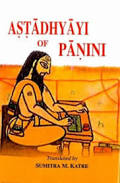
Indian Linguistics: An Ancient Legacy
India, an ancient land and cradle of diverse civilizations, is renowned not only for its cultural richness and profound philosophies but also for its unparalleled linguistic heritage. The Indian approach to language study, especially Sanskrit, was remarkably advanced and emerged centuries before modern Western linguistics. The interest in language study in ancient India stemmed from the need to meticulously preserve and interpret the Vedas, the sacred Hindu texts.
These texts, comprising ritual hymns, held immense importance for the people of India. This very significance led to the development of sophisticated investigations and studies in phonetics, morphology, and semantics.
The Niruktas (etymological interpretations) and Prātiśākhyas (treatises on phonetics and pronunciation rules) are among the earliest examples of linguistic work in India, dating back centuries before Christ. These texts demonstrate that Indian researchers had a deep understanding of speech sounds and how they combine to form words. However, the pinnacle of Indian linguistics can be found in the works of Pāṇini, a prominent linguist of the 5th century BCE. His masterpiece, “Aṣṭādhyāyī” (meaning “Eight Chapters”), is a highly comprehensive and precise grammar of Sanskrit.
Ancient Greece, the Father of the Science of Linguistics
Philosophers like Plato and Aristotle delved into the nature of language, the relationship between words and objects, and logical issues related to language. Their primary concern was the “nature vs. convention” debate (Are the meanings of words inherent or conventional?
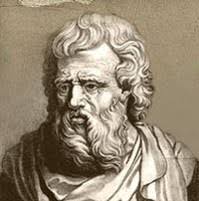
Greece, the cradle of Western civilization, is known for its philosophy, art, and democracy, but its unparalleled role in shaping and establishing linguistics is also noteworthy. The study of language in ancient Greece not only contributed to a deeper understanding of the Greek language but also laid the theoretical foundations for many modern linguistic concepts.
The first signs of interest in language in Greece can be found in the pre-Socratic era. Philosophers like Heraclitus and Parmenides explored the relationship between words and reality and debated the origin of language—whether it was natural or conventional. This fundamental question was one of the first topics in philosophical linguistics that was discussed over centuries.
Linguistics in Greece reached its peak with the studies of Plato and Aristotle. In his dialogue “Cratylus,” Plato extensively discusses the origin of words and the inherent relationship between a name and the object itself. He also points to the distinction between nouns and verbs, a significant step in grammatical analysis. Aristotle, with his systematic and analytical approach, elevated linguistics to a new level. In his works “On Interpretation” and “Rhetoric,” Aristotle categorizes parts of speech (noun, verb, adverb, conjunction), studies sentence structure, and analyzes the logical aspects of language. He was the first to introduce concepts such as subject and predicate. Aristotle’s grammatical analyses formed the basis of grammar writing in the West for centuries.
After Aristotle, interest in linguistics continued in Hellenistic schools, especially the Alexandrian school. This period saw the emergence of grammarians like Dionysius Thrax, who wrote the first comprehensive Greek grammar. His “The Art of Grammar,” which included an eight-part classification of speech (noun, verb, adjective, adverb, article, preposition, conjunction, and interjection), had a tremendous influence on subsequent grammars, including Latin and Arabic grammars. Ancient Greek linguistics has had profound and lasting effects on the development of linguistics throughout history. The concepts and classifications put forward by Greek philosophers and grammarians not only became the basis for Western grammars but also inspired many modern linguistic theories.
Linguistics in Ancient Rome: Roman Grammarians

Ancient Rome, with its military might, governmental organization, and vast cultural heritage, played an indispensable role in shaping Western civilization. While the Greeks were pioneers in philosophical and linguistic theorization, the Romans adopted a more pragmatic approach to language, primarily based on religious beliefs and efforts to preserve, standardize, and teach Latin for reading the Bible. Linguistics in Rome, mainly in the form of grammar writing and explaining the structure of the Latin language, left a lasting legacy.
The Romans were greatly influenced by Greek culture and science. They transferred many grammatical concepts formulated by Greek grammarians (such as Dionysius Thrax) to Latin. However, there were also important differences. While the Greeks delved into the philosophical roots of language and the relationship of words to reality, the Romans focused more on the practical and educational aspects of language. Their main goal was to correctly teach Latin to children and orators and to preserve the language for accurate reading of biblical texts.
Beginnings of Latin Grammar Writing
The first efforts to compile Latin grammar began in the 2nd and 1st centuries BCE. One of the prominent figures of this period was Varro (Marcus Terentius Varro). In his extensive work, “De lingua Latina” (On the Latin Language), he comprehensively examined the origin of words, etymology, morphology, syntax, and even local dialects. Although not all parts of this book are available today, the surviving sections demonstrate Varro’s deep linguistic knowledge and his efforts to systematize the Latin language. During the Roman Empire, grammar writing reached its peak, and comprehensive and precise grammars were compiled for the Latin language, which were used as educational texts for centuries.
In the Middle Ages, Donatus’s eight-part classification of speech (noun, verb, adjective, adverb, article, preposition, conjunction, and interjection – though Latin lacked a definite article, its place was taken by demonstrative pronouns) had a profound impact on subsequent grammars in Europe. Priscian: In the 6th century CE, he wrote a Latin grammar in 18 books. This book was the most comprehensive and influential Latin grammar, covering all aspects of phonetics, morphology, syntax, and even some philosophical discussions of language. Language Standardization: Roman grammars played a vital role in standardizing and preserving the “purity” of the Latin language. These efforts helped solidify Classical Latin and made it the language of science, government, and the church for centuries.
Linguistics in ancient Rome, with its focus on the description, standardization, and teaching of the Latin language, left an immense legacy. Although the Romans did not engage in philosophical theorization of language as much as the Greeks, their genius in compiling comprehensive and practical grammars made Latin one of the most important languages in human history and laid the foundations for language study in the West for centuries.
Linguistics in Islamic Civilization
Islamic civilization, which spread across centuries from India to Spain, not only made remarkable advancements in sciences, philosophy, arts, and architecture but also left an influential linguistic legacy. The study of language in the Islamic world primarily originated from the need to understand and preserve the Qur’an and quickly evolved into an independent and complex scientific discipline. The need to preserve and accurately interpret the Qur’an was the main driving force behind the formation and development of linguistic studies in the Islamic world.

To ensure the correct recitation of the Qur’an, Muslims began to meticulously study Arabic phonetics (the science of sounds), morphology, and syntax (grammar) from the very beginning. This precise approach greatly contributed to the preservation and standardization of classical Arabic. From the second century AH onwards, the study of Arabic grammar reached its peak. Two main schools emerged in this field that had a lasting impact on Islamic linguistics:
* The Basra School: This school, operating based on logic and analogy, sought to find general rules and fundamental principles of language. Sibawayh (died 180 AH/796 CE), the greatest grammarian of the Basra school, created a masterpiece of Arabic grammar with his unparalleled book, “Al-Kitāb” (The Book). “Al-Kitāb” is a comprehensive and extremely precise analysis of Arabic phonetics, morphology, and syntax, which remained unrivaled in its scope, depth, and methodology for centuries and served as a model for subsequent grammarians.
* The Kufa School: This school, which operated more based on collecting linguistic evidence, had more flexibility in its rules. Although the Kufa school was not as systematic as Basra, it contributed to completing and enriching grammatical discussions.
Following these two schools, prominent grammarians like Ibn Jinni (died 392 AH/1002 CE), with works such as “Al-Khasā’is”, delved deeper into linguistic phenomena and the philosophy of language.
In addition to grammar, Muslims made significant advancements in other areas of linguistics:
* Lexicography: Efforts to collect Arabic vocabulary and explain their meanings led to the compilation of extensive dictionaries. Among the most important is “Al-ʿAyn” by Al-Khalil ibn Ahmad al-Farahidi (died 170 AH/786 CE), which was the first Arabic dictionary based on the phonetic order of letters.
* Rhetoric and Literary Criticism: Muslims were also interested in the aesthetic and impactful aspects of language. They engaged in rhetorical and literary analysis of texts and formulated rules of eloquence and rhetoric. Abd al-Qahir al-Jurjani (died 471 AH/1078 CE), with his theory of “Naẓm” (cohesion), analyzed the semantic and syntactic structure of sentences in creating beauty and impact, going beyond morphology and syntax to emphasize the relationship between words in a sentence and the resulting meaning.
* Language Teaching: With the expansion of Islamic conquests and interaction with other languages (such as Persian, Greek, Syriac, Indian), the need for translation and learning other languages also increased. This led to an awareness of linguistic differences and similarities and, consequently, initial steps towards language teaching methods.
* Philosophy of Language: Muslim philosophers also addressed theoretical issues of language. Philosophers such as Al-Farabi, Ibn Sina, and Ibn Rushd contemplated the relationship between language and logic, the origin of language, and the role of language in human thought.
Linguistics in Islamic civilization was a dynamic and innovative field that arose from religious needs but quickly evolved into an independent science with analytical approaches. From Sibawayh’s unparalleled precision in “Al-Kitāb” to the philosophical insights of Ibn Jinni and Al-Jurjani, this rich legacy not only helped preserve and develop the Arabic language but also offered profound insights into the nature of language, its structure, and its relationship with thought and culture.
Europe: The Heart of World Linguistics

In the late Middle Ages, alongside Latin, interest in indigenous European languages (such as Old English, Old French, Old German, etc.) gradually began to emerge. Bilingual dictionaries and the first attempts to compile grammars of native languages gradually took shape. The Renaissance saw a revival of classical studies and a renewed interest in Greek and Latin. More importantly, geographical discoveries and the encounter of Europeans with non-European languages in Asia, Africa, and America broadened linguistic perspectives.
The discovery of Sanskrit in the late 18th century by European scholars (especially Sir William Jones in 1786, who noted its similarities with Greek, Latin, Germanic, Celtic, and Persian) revolutionized European linguistics. This discovery led to the emergence of comparative-historical linguistics. Scholars like Franz Bopp and Jacob Grimm, by systematically comparing Indo-European languages, reconstructed ancestral languages and discovered laws of sound change (such as Grimm’s Law). This approach transformed linguistics from a descriptive discipline into a historical and descriptive science. The 20th century in Europe was a period of major revolutions in European linguistics, shaping many modern theories.
* Ferdinand de Saussure: This Swiss linguist, with his posthumously published book “Course in General Linguistics,” is considered the father of structural linguistics. His approach analyzed language as a self-contained system of internal relationships and had a profound impact on all branches of humanities and social sciences.
* The Prague School, with linguists like Nikolai Trubetzkoy and Roman Jakobson, developed phonology. Instead of merely studying sounds, they examined the role and function of sounds within a linguistic system.
In recent decades, cognitive linguistics, which studies language in relation to the human mind, and functional approaches, which emphasize the function and use of language, have gained prominence in Europe. In recent years, European linguists have also played a significant role in the development of natural language processing (NLP) systems, machine translation, and speech analysis.
Linguistics in Europe, from ancient times to the present day, has traversed a long and complex path. From Greek and Roman philosophers and grammarians to the discovery of Sanskrit and the rise of comparative-historical linguistics, and finally the theoretical revolutions of Saussure and modern schools, Europe has always been at the forefront of linguistic research.
Linguistics in the Americas
The Americas, a vast continent with a unique linguistic history, became a major laboratory for linguistic research from the very beginning of its encounter with the Western world. The discovery of hundreds of indigenous languages with linguistic structures completely different from European languages posed new challenges for linguists and led to the development of innovative and influential approaches in the field. This article examines the trajectory of linguistics in the Americas, focusing on the role of the United States and its remarkable achievements.

Before the arrival of Europeans, the Americas were home to thousands of indigenous languages, many of which differed significantly from Indo-European languages in terms of structure, vocabulary, and sound systems. This unparalleled linguistic diversity sparked the first linguistic thinking on the continent: European missionaries and travelers, to facilitate communication and evangelism, began to record and provide rudimentary descriptions of these languages. They compiled simple grammars and dictionaries for some indigenous languages (such as Navajo, Cherokee, Maya, Aztec, etc.). These early works, though written from a Eurocentric perspective, provided the first documentation of these languages. These initial documentations showed that indigenous languages of the Americas often had very complex and entirely different morphological and syntactic systems that went beyond the frameworks of Latin or Greek grammar. This linguistic “shock” gradually challenged the idea that European languages were the only “natural varieties” of language.
Entering the 19th and 20th centuries, linguistics in the United States developed into an independent and dynamic scientific discipline.
* Franz Boas: The German American anthropologist is considered the father of American anthropology and also one of the founders of modern linguistics in America. With his linguistic anthropological approach, he emphasized that each language should be analyzed based on its internal structure and without imposing concepts from other languages. His work on Native North American languages, especially Eskimo and Native American languages, revolutionized linguists’ perspectives and proved linguistic diversity.
* Edward Sapir: A student of Boas, he was one of the most influential linguists of the 20th century. He delved into the deep relationship between language, culture, and thought. The Sapir-Whorf Hypothesis, which states that language influences our thought and perception of reality, is one of the most important and controversial theories in American linguistics. He also emphasized the meticulous study of endangered languages.
* Leonard Bloomfield: Another important figure in the American school, he contributed to the founding of structural linguistics in America with his behaviorist approach and emphasis on precise observation and description of linguistic data. His book “Language” became one of the most important linguistic textbooks of the 20th century.
The Chomskyan Revolution and Generative Linguistics
The second half of the 20th century witnessed one of the greatest revolutions in the history of linguistics, centered in the United States and MIT.
* Noam Chomsky: With the introduction of Generative-Transformational Grammar in the late 1950s, he fundamentally transformed the approach to linguistics. Instead of merely describing linguistic data, he emphasized the inherent and universal human capacity for language acquisition (language as a mental/cognitive phenomenon). Chomsky’s distinction between an individual’s “unconscious knowledge of language” (competence) and “actual use of language” (performance) was a fundamental concept. He believed that all human languages operate based on common, innate principles inherent in the human mind. The Chomskyan revolution transformed linguistics from a descriptive discipline into a cognitive and theoretical science and profoundly influenced the philosophy of mind, cognitive psychology, and artificial intelligence.
Linguistics in the Americas, with the unparalleled diversity of indigenous languages and the emergence of figures like Boas, Sapir, Bloomfield, and Chomsky, has become one of the most dynamic and influential areas in the field. From the discovery of unfamiliar linguistic structures to theoretical revolutions that transformed our view of language and the human mind. (Translated by Gemini)